

Beyond the Precipice

Whether in the horrors of October 7 or the full-fledged US-Israeli alliance against Iran, I know of no modern precedents. The Jewish people stand at a hinge of history
By Michael Oren
Throughout the more than two-and-a-half years of this war, there have been many moments that Israel and the Jewish people stood at a hinge —if not a precipice— of history. Whether in the horrors of October 7 or the full-fledged US-Israeli alliance against Iran, I know of no modern precedents. Yet, in one crucial, fundamental, and fateful way, our reality has perhaps permanently changed.
The vast impact of that transformation struck me, suddenly, during a recent visit to Chicago. While driving to meet me at a Jewish event in the city, a friend photographed a car with a large sign attached to its roof. “USA tax dollars belong here,” it shouted, “not in Israel.”
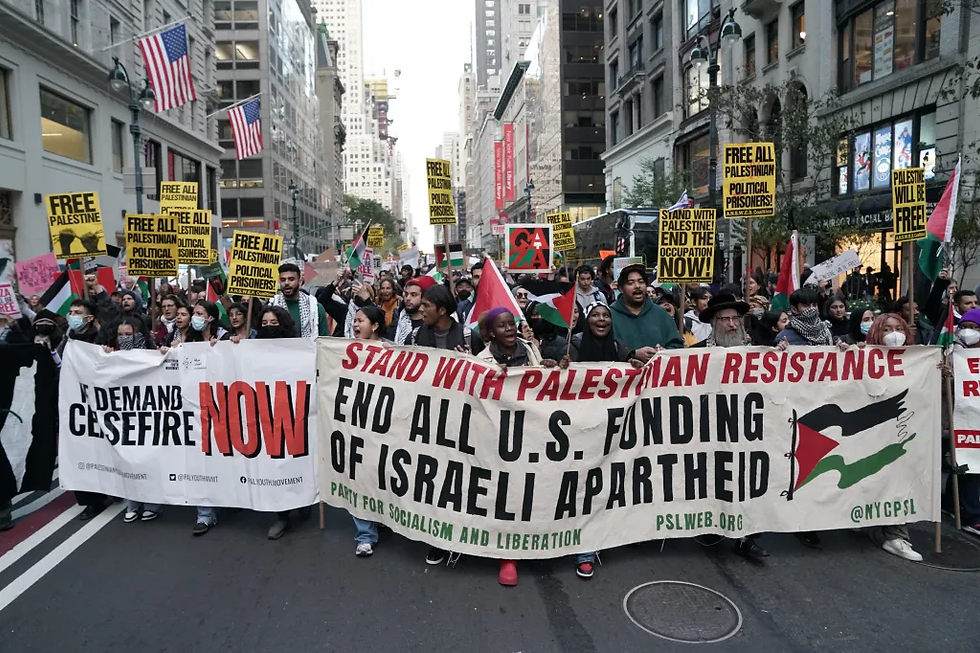
Several years ago, such a sign would have triggered debate about the right of free speech and the question of whether criticism of Israel was tantamount to antisemitism. No longer. Today, that sign has to be viewed in the context of a far deeper and nationwide assault on Israel’s right to defend itself and even our right to exist. Calls to terminate military aid to Israel and to reject all contributions from the pro-Israel lobby have become the de facto policies of the Democratic Party. A burgeoning segment of Republicans agrees.
Thinly disguised as anti-Zionism, Jew hatred has been normalized in America. Elsewhere—in Canada, Australia, and Europe—it has metastasized. Young generations throughout the West, fed by an endless stream of anti-Israel posts, now view us as the source of all evil in the Middle East, if not the world.
In the not-too-distant future, we must assume, few foreign leaders will actively block efforts to boycott and sanction Israel or veto anti-Israel resolutions in the UN Security Council. As never before, Israel will be diplomatically and legally isolated.
The situation might be less alarming if accompanied by a reduction in the physical threats facing Israel. But, on the contrary, enemies both on our borders and throughout the Middle East continue to seek our destruction. Barring a decisive victory over Iran, the military dangers facing Israel are liable to persist if not multiply.
Confronted with these enormous challenges, the Jewish State must not remain passive. In Israel, traditionally, foreign policy has always been regarded as the poor stepchild of security. Washington hosts dozens of foreign policy institutes. In Israel, by contrast, virtually all the think-tanks focus on the military. We must cease viewing foreign affairs as a sideline, but rather regard it as a paramount component of our national defense. We must cease assigning vital diplomatic and foreign policy posts to political appointees bereft of serious international experience.
Though vital, the campaign to rebuild our international relations cannot succeed without the restoration of our internal unity. By standing together, Israelis in the past prevailed over seemingly insurmountable challenges—wars, intifadas, UN condemnations. Divided, we are dangerously vulnerable, as we learned on October 7.
Along with defending our land and skies, the priority of any Israeli government —and certainly the less radical coalition that will hopefully enter office after October’s election— is to heal the wounds and divisions within our society.
Achieving that unity requires, firstly, the establishment of a truly independent investigative commission on October 7. Attaining unity means applying Israeli law and sovereignty over every part of our population and territory. Assuring the enlistment of Haredim in the IDF and integration into the economy is an essential prerequisite of unity.
One of the most daunting chapters in our history has already begun. Israel must gird itself, strengthen ourselves internationally and domestically, and unite to withstand the storm. History is rife with examples of our people’s ability to overcome immense obstacles. With leadership and vision, we can surmount them once again.


Comentarios